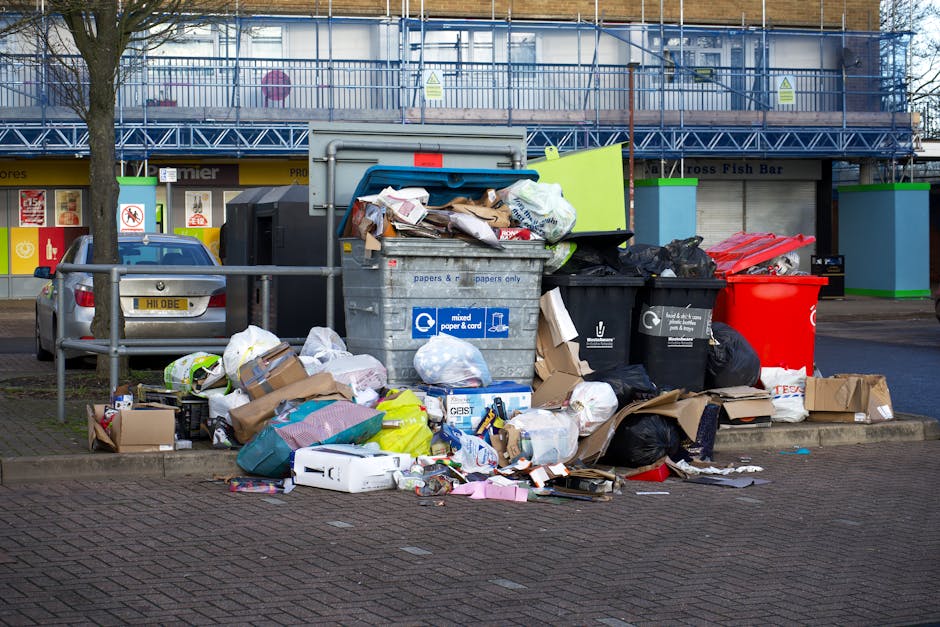
Rubbish removal options near Forest Gate station E7: a practical local guide
If you are dealing with a pile of unwanted items near Forest Gate station E7, the job can feel bigger than it looks. A broken wardrobe by the hallway, bagged-up loft clutter, builders' debris after a quick refit, or a mattress that has been leaning against the wall for a week - it all adds up fast. The good news is that rubbish removal options near Forest Gate station E7 are flexible, and you do not need to guess your way through them.
In this guide, we'll walk through the main collection and clearance choices, what suits different types of waste, what to watch out for, and how to choose the most sensible route for your time, budget, and property. If you just want a straightforward service overview as you read, you can also look at the site's waste removal page or check pricing and quotes for how services are typically discussed.
Let's face it: rubbish removal is rarely exciting. But a clean room, a clear hallway, and a skip-free pavement in the right place? That part feels very good indeed.
Table of Contents
- Why rubbish removal options near Forest Gate station E7 matter
- How rubbish removal near Forest Gate station E7 works
- Key benefits and practical advantages
- Who this is for and when it makes sense
- Step-by-step guidance
- Expert tips for better results
- Common mistakes to avoid
- Tools, resources and recommendations
- Law, compliance, standards and best practice
- Options, methods and comparison table
- Case study or real-world example
- Practical checklist
- Conclusion
- Frequently asked questions
Why rubbish removal options near Forest Gate station E7 matters
Forest Gate station sits in a busy part of east London, which means rubbish removal is not just about getting rid of stuff. It is also about access, timing, neighbour consideration, and avoiding a half-day of stress because a sofa blocks the stairwell or a bag of rubble is too awkward to carry alone.
In an area with flats, terraced houses, shops, shared entrances, and tighter streets, the right rubbish removal option can save you time and reduce disruption. Some jobs are tiny - one appliance, a few black bags, a couple of chairs. Others are more involved, like a full flat clearance, garage clear-out, or post-renovation builder's waste. The key is matching the method to the waste, not forcing the waste to fit the method.
That sounds obvious, but it's where many people get stuck. A collection service may be perfect for one-off bulky items. A skip may be better for ongoing DIY work. A full house or house clearance makes sense where there is a lot of mixed furniture and household clutter. And if you are dealing with office paperwork or sensitive materials, a specialist option such as confidential shredding may be the safer route.
Practical takeaway: the best rubbish removal choice near Forest Gate station E7 is usually the one that reduces handling, fits your waste type, and avoids unnecessary delays or lift-and-carry headaches.
How rubbish removal near Forest Gate station E7 works
Most rubbish removal services follow a simple pattern: you describe what needs to go, a quote or estimate is given, collection is arranged, and the waste is loaded and taken away for sorting, recycling, or disposal. The details vary depending on whether you are dealing with furniture, mixed junk, garden waste, or renovation debris.
A typical local workflow looks like this:
- You list the waste type and approximate amount.
- Access is checked: stairs, parking, loading distance, lift use, narrow hallways, or rear access.
- A collection time is set, often with a same-day or next-day option where available.
- The team arrives, loads items, and separates reusable or recyclable material where possible.
- The waste is removed and processed in line with local and national best practice.
Some jobs are very straightforward. A sofa and a broken fridge on the ground floor? Usually simple. A loft full of mixed boxes, old furniture, and a few awkward bits of metal? Still manageable, just a bit more planning. If the waste includes large household items, the site's dedicated pages such as mattress and sofa disposal or fridge and appliance removal can help you understand what specialist handling may be needed.
For heavier DIY material, builders' debris, plasterboard, bricks, and timber, a service like builders waste clearance is often a better fit than trying to force everything into a general household collection. Truth be told, the wrong choice here is usually what causes the most frustration.
Key benefits and practical advantages
Choosing the right rubbish removal option near Forest Gate station E7 brings more than a tidy room. It can improve safety, reduce strain, and cut out a lot of awkward back-and-forth. There is also a peace-of-mind element that people tend to underestimate until the pile is finally gone and the place feels breathable again.
- Less lifting for you: useful if you live upstairs, have no lift, or are clearing bulky furniture.
- Faster turnaround: great when you need a room back in use quickly.
- Better handling of mixed waste: ideal when rubbish is not neatly sorted into one category.
- Cleaner outcomes: especially helpful in shared properties where mess can spread easily.
- More suitable disposal routes: useful for recycling-heavy loads or items that need special handling.
There is also a practical financial benefit. In many cases, paying for the right service once is better than making three separate trips, hiring the wrong container, or discovering that items you thought were simple to dump actually need special treatment. If you are comparing jobs, the site's recycling and sustainability information is worth a look because it reflects the wider expectation that reusable and recyclable material should not be treated as ordinary rubbish where avoidable.
And yes, there's a small emotional win too. Clearing a cluttered room can make the whole property feel calmer. You notice it the minute the floor is visible again.
Who this is for and when it makes sense
Rubbish removal near Forest Gate station E7 is useful for a lot of people, not just those doing a major clear-out. In our experience, the most common customers fall into a few broad groups.
Homeowners and tenants
If your loft, spare room, shed, or hallway has become a storage zone for "I'll deal with that later" items, this is for you. It's also a strong fit when moving out, moving in, or dealing with end-of-tenancy clutter. A focused home clearance can be a neat solution when the job is bigger than standard bin collections but smaller than a full property clearance.
Landlords and letting agents
Turnover days can be tight. If tenants leave furniture behind, or there is a surprise mix of bin bags and broken bits in a flat, a prompt collection helps reset the property quickly. A more comprehensive flat clearance is often the most efficient route when access is via communal stairs or narrow internal corridors.
Tradespeople and renovators
For builders, decorators, kitchen fitters, and DIYers, the issue is usually volume and weight. Packaging, rubble, timber offcuts, tiles, and old fixtures can build up fast. This is where builders' waste clearance and a clear plan for what can go in a skip become especially useful. If you are weighing that option, the what can go in a skip guide is a helpful reference point.
Businesses and offices
Shops, small offices, and storage spaces around the station may need regular or one-off removal. Old desks, shelving, packaging, and out-of-date paperwork can take over a work area before anyone notices. For that, business waste removal or office clearance can be the better long-term fit.
Not every job needs a large operation. Sometimes it is just one mattress, one broken appliance, and a bag of odds and ends. Still counts. Still worth sorting properly.
Step-by-step guidance
If you want the least stressful route, follow a simple process. It keeps the job organised and helps you avoid the classic last-minute scramble where nobody can remember what is going, what is staying, and which chair was supposed to be moved into the back room.
- Identify the waste type. Separate furniture, bags of mixed rubbish, green waste, rubble, electrical items, and anything hazardous.
- Estimate volume. Is it a few items, a van load, or a full property's worth? Be honest here. Guessing low usually backfires.
- Check access. Note stairs, parking restrictions, permits, long carries, or tight communal entrances near the station.
- Choose the right removal method. For bulky household items, a dedicated furniture route may suit you better than general waste collection. For outdoor material, look at garden clearance. For a cluttered outbuilding, garage clearance may be the neatest answer.
- Request a clear quote. Ask what is included: labour, loading, recycling, and any extra handling for awkward items.
- Prepare the items. Put smaller loose rubbish into bags, keep pathways open, and mark anything fragile or not to be removed.
- Confirm timing. If you need to avoid rush hour or noisy loading, say so. Around Forest Gate station, timing can make a big difference.
- Walk the route at pickup. A quick check prevents missed items and prevents arguments over a lamp that looks identical to another lamp. Small mercy, that.
If the waste includes awkward household items, it may be worth checking whether a specialist route is better. For example, a worn-out sofa is usually simpler through furniture disposal than through a catch-all clearance. Likewise, damaged appliances are often easier to manage through the site's dedicated appliance page than as loose general waste.
Expert tips for better results
The difference between a smooth removal and a slightly chaotic one is usually made in the prep. A few small habits can save time, reduce cost, and make the team's work much easier.
- Sort before collection where possible. Separate reusable furniture, recyclable cardboard, and obvious waste.
- Measure the awkward pieces. Long wardrobes, headboards, and old desks are often the items that create delays.
- Keep a "do not touch" zone. A labelled corner can stop paperwork, chargers, or personal items being bundled in by mistake.
- Photograph the load. A quick phone photo helps if you are asking for a quote remotely and want to avoid surprises.
- Think about the route out. A clear hallway is worth more than people realise. One blocked landing can slow a whole job down.
- Ask about recycling. Good operators should be able to explain how mixed loads are sorted and what happens to recoverable material.
A small extra tip: if you are clearing before a move or tenancy handover, do the rubbish first, not last. It sounds backwards, but it usually saves stress. You will thank yourself at 8:30pm when the room is no longer full of odd bits and packing paper.
For a broader view of trusted practices, pages such as insurance and safety and health and safety policy are useful signals that the provider takes practical site risks seriously rather than treating the job as a simple lift-and-go.
Common mistakes to avoid
Most rubbish removal problems are preventable. The trouble is, people tend to only notice the risk after the waste is already half sorted and the clock is ticking.
- Underestimating the volume. One pile of junk can become two once you start moving it.
- Mixing hazardous items with general waste. Paint, chemicals, fuel, or unknown containers need a separate conversation.
- Assuming everything can go together. A mattress, an appliance, and rubble may need different handling routes.
- Forgetting access issues. Narrow staircases and no-parking streets near the station can affect price and timing.
- Not checking what is excluded. If an item needs specialist disposal, say so early. That saves everyone hassle.
- Leaving the booking until the last minute. Not always a disaster, but it does reduce your options.
One common slip-up is trying to make a job fit a skip just because a skip feels familiar. Sometimes that is fine. Sometimes it is not. If you need to understand the boundary better, the what can go in a skip page is a practical sanity check. If the load is very mixed or awkwardly placed inside a flat, a direct collection may be easier.
And a small but important point: do not assume "rubbish" means "anything goes". In the real world, it rarely does.
Tools, resources and recommendations
You do not need specialist equipment to organise a removal, but a few simple tools make the process far easier. Nothing fancy. Just common-sense stuff that helps you stay in control.
- Phone camera: to photograph the load for a quote and to record the before-state of a room.
- Marker labels: for items you want kept, donated, or removed separately.
- Gloves and sturdy bags: useful for sharp edges, dusty loft items, or damp garden waste.
- Measuring tape: especially helpful for bulky furniture and appliance access.
- Notebook or notes app: for listing what is going, what is staying, and any special instructions.
As a recommendation, it helps to look at service pages by waste type rather than assuming a general rubbish removal page covers every situation. For example, if the job is largely furniture, the site's furniture clearance page is more relevant. If you are handling old appliances, check the appliance-specific page. If it is a business premises, business waste removal is a better editorial fit than a household route.
For larger domestic jobs, loft clearance can be particularly useful because lofts often contain a strange mix: boxes, broken furniture, old decorations, and random items that nobody has looked at properly for years. The dust alone can tell a story.
Law, compliance, standards and best practice
Rubbish removal is not just a convenience service; it also touches on safety, handling, and responsible disposal. In the UK, the basic expectation is that waste is managed properly, transferred responsibly, and not left to become someone else's problem. You do not need to be an expert in regulations to benefit from that standard, but you should work with providers who behave as if it matters.
Here are the main best-practice points to keep in mind:
- Separate hazardous items: chemicals, solvents, fuels, and other risky materials should not be mixed into ordinary loads.
- Use appropriate handling methods: heavy items, fridges, and large furnishings may need two-person lifting or careful dismantling.
- Keep access safe: clear pathways reduce the risk of damage to walls, floors, and communal areas.
- Protect privacy: paperwork and personal documents should be treated carefully, not casually bundled with general rubbish.
- Ask about recycling routes: a credible operator should be able to explain how recoverable material is separated where feasible.
If a job involves fragile surfaces, tight stairwells, or awkward lifting, safety should be part of the quote, not an afterthought. That is one reason pages like health and safety policy and insurance and safety can matter to someone choosing a provider. It is a practical trust signal.
For waste that needs extra care, the dedicated hazardous waste disposal page is particularly relevant. Not everything can be dealt with in the same way, and honestly, that is a good thing.
Options, methods and comparison table
Different rubbish removal methods suit different situations. The best choice often comes down to volume, access, time pressure, and how mixed the load is.
| Option | Best for | Strengths | Watch-outs |
|---|---|---|---|
| Direct rubbish collection | Mixed household junk, bagged waste, a few bulky items | Quick, convenient, minimal lifting for you | Can be less suitable for large volumes or very heavy waste |
| Furniture-focused removal | Sofas, wardrobes, beds, tables | Good for bulky items that are hard to move yourself | May need dismantling or extra access planning |
| House or flat clearance | Full rooms, end-of-tenancy clearances, probate-related clear-outs | Efficient for large mixed loads | Needs good communication about what stays and what goes |
| Skip hire | DIY projects, ongoing renovation waste, predictable volumes | Useful for work you are managing over time | Access, permits, and prohibited items may limit usefulness |
| Specialist disposal | Appliances, mattresses, hazardous or sensitive waste | Safer handling and more suitable disposal route | Needs the right service for the right item |
One of the simplest decision rules is this: if the waste is already neatly grouped and you expect it to keep coming for a few days, a skip may be a solid choice. If the waste is mixed, awkward, inside a flat, or you want it gone in one visit, direct removal is usually more sensible. For a lot of people near Forest Gate station E7, that second route is the cleaner fit.
Case study or real-world example
A realistic example: a couple in a first-floor flat just off the station had two old wardrobes, a broken chest of drawers, several black bags from a declutter, and an ancient mattress that had been in the spare room far too long. They had tried to sort it themselves the week before and quickly realised the stairwell was the problem. The wardrobe looked simple until they tried to turn it on the landing. Not simple at all.
Rather than hiring a skip, they chose a direct removal approach. They grouped the waste by type, kept the hallway clear, and flagged the mattress and furniture separately. The team could load it without blocking the building for long, and the mixed load was handled in one go. The result was less disruption to neighbours, less lifting for the household, and no need to spend an evening filling a container on the street.
What made the difference? Planning. Not perfect planning - just enough. They knew what was going, they knew what was staying, and they accepted that some items were not worth wrestling with for an extra hour. That bit matters more than people think.
Practical checklist
Use this checklist before booking or starting a rubbish removal job near Forest Gate station E7:
- List every item or waste type you want removed.
- Separate hazardous, electrical, and general items.
- Measure large furniture, appliances, or awkward objects.
- Check access, stairs, lifts, and parking.
- Decide whether the job is a one-off collection, clearance, or skip-style project.
- Photograph the waste if you need a remote quote.
- Confirm what is included in the price.
- Label anything that must stay.
- Keep pathways open on the day.
- Ask how reusable and recyclable material is handled.
Quick self-check: if you can answer "what, how much, where from, and how easy to access?" you are already ahead of most people who book in a rush.
Get a free quote today and see how much you can save.
Conclusion
Rubbish removal options near Forest Gate station E7 are not one-size-fits-all, and that is actually a strength. You can choose a method that suits a single bulky item, a cluttered flat, a garden clear-up, a business space, or a heavier DIY job. Once you match the waste to the right service, everything gets easier: less lifting, less delay, fewer mistakes, and a cleaner finish.
If you are unsure where your job fits, start with the waste type and the access. That usually tells you the rest. And if the job feels awkward, mixed, or time-sensitive, it probably deserves a more direct, specialist approach rather than a guess.
To be fair, that's the real secret here: not doing more, just choosing better.
Frequently Asked Questions
What are the main rubbish removal options near Forest Gate station E7?
The main options are direct rubbish collection, furniture removal, full flat or house clearance, skip hire for ongoing projects, and specialist disposal for items like appliances or hazardous waste.
Is rubbish removal better than hiring a skip?
It depends on the job. If you have mixed waste, awkward access, or want everything taken away in one visit, rubbish removal is often easier. If you are doing a longer DIY project and can fill waste gradually, a skip may suit you better.
Can I get bulky items removed from a flat near Forest Gate station?
Yes. Bulky items like sofas, wardrobes, and mattresses are commonly removed from flats, though access details matter. Stairs, lifts, and narrow corridors can affect the best approach.
What should I do with old furniture?
Old furniture is usually best handled through a furniture-specific service or a flat or house clearance if there are several items. If the furniture is mixed with other household waste, a broader clearance may be simpler.
How do I know if I need a full clearance or just rubbish removal?
If you are clearing a room, loft, garage, or entire property, a clearance is often the better fit. If you only have bagged waste or a few loose items, a simpler rubbish removal option may be enough.
Can appliances be taken away with general rubbish?
Usually not as a default assumption. Fridges, freezers, and some electrical appliances often need a more suitable disposal route, so it is safer to flag them early and use the proper service.
What happens to the waste after collection?
Waste is normally sorted for recycling, reuse where possible, and responsible disposal. The exact process varies, but a sensible provider should handle the load carefully rather than treating everything as general rubbish.
Are there extra issues with rubbish removal near a busy station area?
Yes, access and timing matter more. Parking, loading distance, foot traffic, and shared entrances can all affect how smoothly a job goes. A little planning helps a lot.
How do I prepare for a rubbish removal booking?
Separate items, clear pathways, measure bulky pieces, and keep anything you want to retain away from the collection area. A few minutes of prep can save a surprising amount of time on the day.
Is hazardous waste handled differently?
Yes. Hazardous items such as chemicals, solvents, and other risky materials need careful handling and should not be mixed into ordinary waste. Always mention these items early so the right approach can be used.
Can rubbish removal help with end-of-tenancy clear-outs?
Definitely. End-of-tenancy jobs often include leftover furniture, bags of clutter, broken items, and a few bits nobody wants to deal with at the last minute. A clear-out service can make the handover much smoother.
Where should I start if I'm unsure which option to choose?
Start with the waste type and quantity, then look at access. If the job is mixed, bulky, or inside a flat, direct removal or clearance is usually the best place to begin. If it is a larger project with predictable waste, another route may fit better.